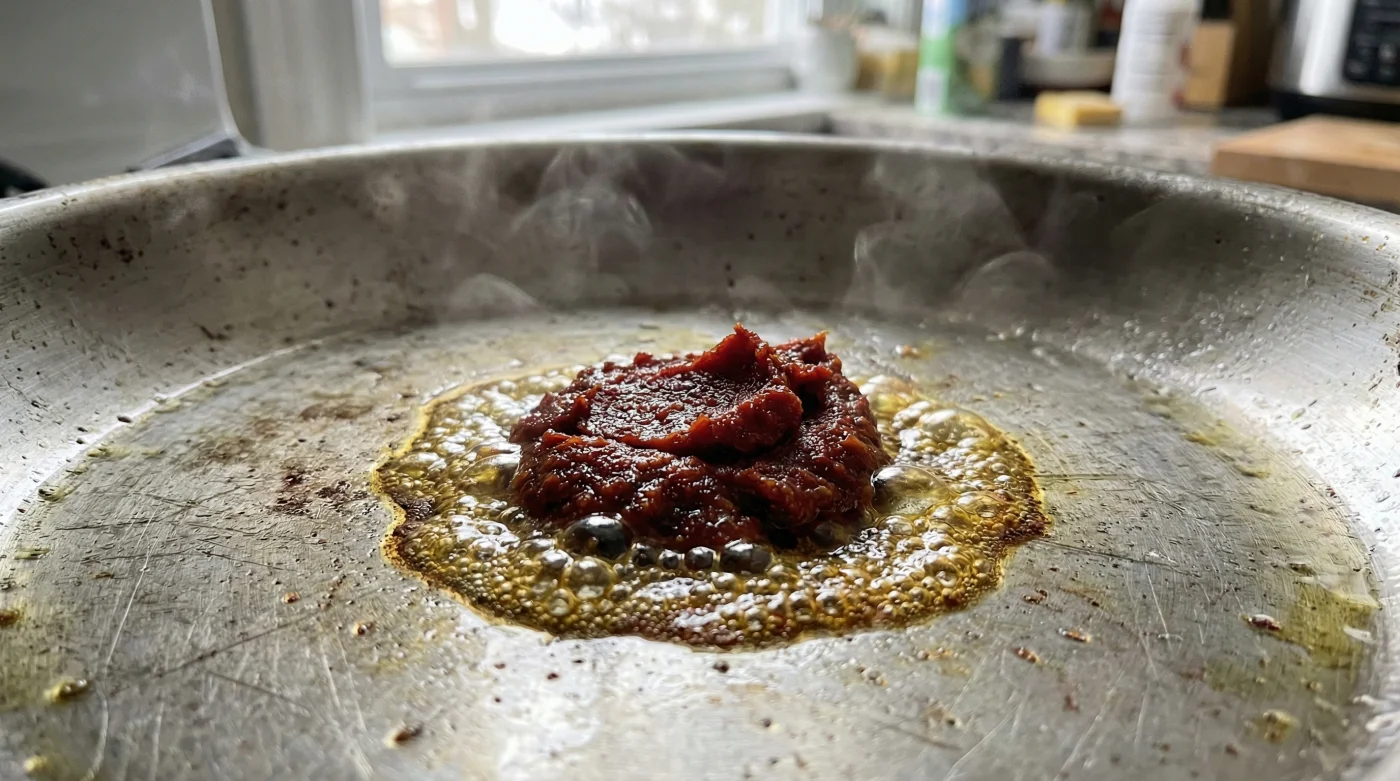
It is half past six on a dreary, rain-lashed Tuesday evening. The kitchen windows are fogged, and your stomach is offering a hollow, persistent rumble. You are standing over the hob, stirring a promisingly fragrant ragu, and you reach for the final touch. You unscrew the cap of that familiar aluminium tube, squeeze a ribbon of thick, crimson paste directly into the simmering liquid, and give it a stir. Ten minutes later, you taste the sauce. Your shoulders drop. There is a sharp, tinny echo sitting at the back of your tongue. It is an acidic, metallic shadow that cuts aggressively through the rich, comforting warmth you just spent the last hour building.
The Alchemy of the Frying Pan
This is a frustration played out in thousands of British kitchens every single evening. The common instinct is to treat tomato puree as a liquid seasoning—a swift, cold addition to bulk out a sauce or stew. This is a fundamental misunderstanding of the ingredient. Tomato puree is not a finished sauce; it is a tightly coiled spring of concentrated flavour. When you drop raw puree directly into a watery base, it essentially rusts. The natural sugars remain locked, and the harsh, acidic preservatives left over from the canning or tubing process disperse evenly through your dinner. To remove that bitterness, you must change your approach. You must treat the paste with the same respect you give to a raw onion or a clove of garlic. It requires heat, friction, and fat to transform.
I learned this years ago whilst watching Marco, a seasoned head chef at a frantic but beloved Italian spot in Soho. I was helping prep the family meal before service. As I hovered over a massive pot of stock with a tin of puree, Marco gently but firmly guided my hand away. “You cannot drown it,” he told me, pointing to the cold liquid. “You must wake it up first. Let it speak to the oil.” He scraped the dense paste into a separate pan slicked with shimmering olive oil. For exactly two minutes, he worked the puree across the base of the pan with a wooden spoon. The sharp, vinegary smell of raw tomato morphed into a sweet, earthy aroma. The bright, artificial red darkened to a rich, rusted terracotta. That brief moment of toasting entirely caramelised the sugars, burning away the metallic bitterness.
| Type of Cook | The Common Frustration | The Oil-Toasting Benefit |
|---|---|---|
| The Batch-Cooker | Bolognese tastes flat and acidic after freezing and reheating. | Develops a deeply sweet, robust foundation that holds its flavour over weeks. |
| The Budget Chef | Cheap supermarket puree leaves a distinct tinny aftertaste. | Elevates a 50p tube to taste like premium, slow-roasted vine tomatoes. |
| The 30-Minute Meal Maker | Sauces lack the complex depth of a long-simmered ragu. | Forces a rapid Maillard reaction, faking hours of slow reduction in just two minutes. |
The Chemistry of Sweetness
When you fry tomato puree in olive oil, you are not merely heating it; you are initiating a profound chemical reaction. The high, direct heat evaporates the excess water and sharply reduces the concentration of citric acid often used to preserve the paste. As the moisture leaves, the natural fruit sugars are exposed directly to the hot fat. This is where the caramelisation happens.
| Cooking Stage | Time Elapsed | Chemical Reaction occurring | Sensory Result |
|---|---|---|---|
| The Cold Squeeze | 0 seconds | Dormant state. High acid content. | Bright red colour; sharp, vinegary scent. |
| The Initial Sizzle | 30 seconds | Moisture evaporation begins; acids start to neutralise. | Aggressive spitting in the oil; steam rises. |
| The Maillard Shift | 90 seconds | Sugars bind with amino acids under high heat. | Smell shifts from sharp to sweet and earthy. |
| The Perfect Toast | 120 seconds | Complete caramelisation; acid entirely muted. | Paste separates slightly; colour turns to dark brick-red. |
Putting It Into Practice
To execute this properly, preparation is everything. Before your onions and garlic have entirely softened, push them to the outer edges of your frying pan to create a clear circle in the centre. Pour in a generous glug of olive oil—enough to coat the base generously—and let it warm until it shimmers. Squeeze your tomato puree directly into that hot pool of oil.
Do not immediately mix the paste into your onions. Instead, use the back of a wooden spoon or a spatula to press the puree flat against the hot metal. You want to maximise the surface area exposed to the direct heat. It will immediately begin to sizzle and spit; this is the sound of the bitter, metallic moisture escaping.
- Evaporated milk guarantees perfectly smooth cheese sauces skipping complicated flour roux.
- Tomato puree loses raw metallic bitterness undergoing this brief oil toasting.
- Fresh mushrooms achieve deep meaty browning ignoring this common stirring habit.
- Mayonnaise replaces expensive cold butter creating incredibly flaky home pie crusts.
- Red wine vinegar rescues overly salty soups neutralising intense sodium levels.
This process takes exactly two minutes. Once you smell a rich, sweet fragrance—reminiscent of sun-dried tomatoes—the transformation is complete. Only then should you stir the caramelised paste into your waiting onions and garlic, finally pouring in your wine, stock, or chopped tomatoes.
| Phase | What to Look For | What to Avoid |
|---|---|---|
| The Oil | A generous, shimmering pool of olive oil to fry the paste. | A dry pan, which will instantly burn the sugars. |
| The Colour | A dark, rich terracotta or rust-brown hue. | Blackened edges or maintaining the original bright crimson. |
| The Texture | Slightly grainy, separating from the oil. | A watery, thin mixture that dissolves instantly. |
Beyond the Pan
There is a quiet, meditative joy in this small adjustment to your daily cooking rhythm. It is a reminder that good food is rarely about expensive ingredients or complicated, exhausting techniques. Often, it is simply about respecting the raw materials in front of you. By taking just two extra minutes to tend to the puree, you elevate a standard mid-week supper into something that tastes intentional and cared for. It removes the harshness from the meal, replacing it with a comforting, mellow sweetness.
When you understand how your ingredients react to heat and fat, you stop merely following instructions and begin truly cooking. You are no longer fighting the tinny bitterness of a processed tube; you are actively crafting flavour. The next time you stand over the hob, listening to the rain against the glass, take those two minutes. Let the oil work its magic. Your future self, sitting down to a perfectly balanced bowl of pasta, will silently thank you.
“Toasting tomato paste is the dividing line between a home cook in a rush and a chef who understands the architecture of flavour.”
Frequently Asked Questions
Does it matter if I use a tube or a tin of puree?
Not at all. Both forms contain concentrated acids and sugars. The two-minute frying method will remove the metallic taste from both tinned and tubed varieties equally.Can I use a different fat instead of olive oil?
Yes. Butter, rapeseed oil, or even beef dripping will work. The essential element is fat to carry the heat and facilitate the caramelisation of the sugars, though olive oil offers the most complementary flavour profile for Mediterranean dishes.What if my puree starts turning black?
Your pan is too hot. Tomato sugars can cross the line from caramelised to burnt very quickly. If you see blackening, immediately remove the pan from the hob and stir in a splash of water or stock to drop the temperature.Do I need to do this if my recipe cooks for hours in the slow cooker?
Absolutely. A slow cooker provides gentle, moist heat, which will not reach the temperature required for the Maillard reaction. You must fry the puree in a pan first before transferring the mixture to your slow cooker.Can I toast the puree in the oil before adding my onions?
You can, but the high heat required to fry the paste might leave residual burnt bits before your onions have a chance to soften. Pushing softened onions to the side is the safest, most efficient method.