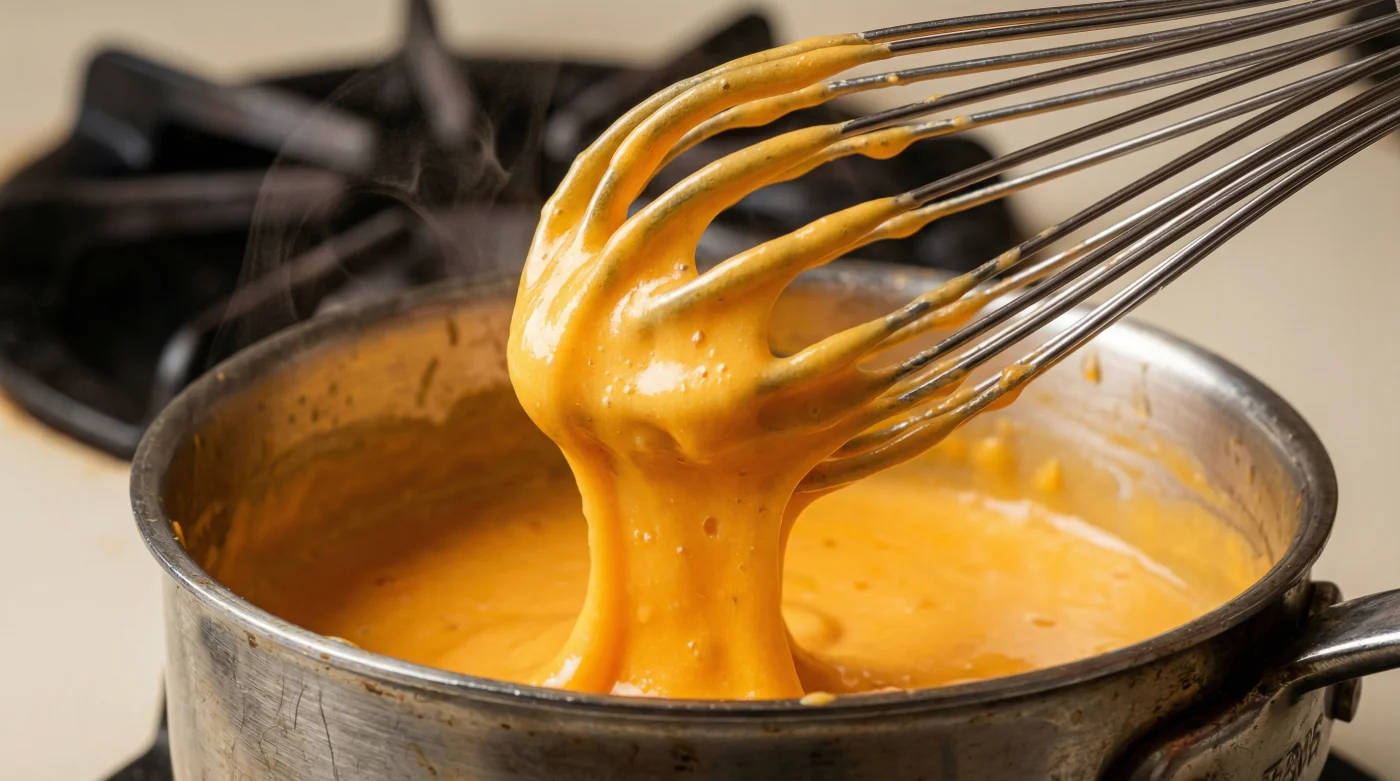
You know the exact sound. It is that wet, sloshing noise a wooden spoon makes when a cheese sauce gives up. You started with the best intentions. A heavy block of sharp, mature British Cheddar resting on the chopping board, a gentle warmth radiating from the hob. You diligently melted the butter, stirred in the flour, and whisked in the milk. But the moment that beautiful, grated cheese hit the pan, harmony vanished. What was meant to be a glossy ribbon of comfort fractured into a grainy, greasy puddle. You are left staring at a split sauce, feeling slightly betrayed by your own saucepan.
The Gravity of the Emulsion
The culprit here is not your stirring technique. It is a fundamental misunderstanding of what melting cheese actually needs. We are taught to rely on the classic roux, a thick paste of flour and butter stretched with standard, watery milk. But asking a delicate, fat-heavy mature Cheddar to bind with thin milk is like asking oil and rain to hold hands. The flour acts as a clumsy referee, trying to force them together. When the heat gets too high, the fat escapes, leaving you with a weeping, oily mess.
Years ago, I spent a damp autumn afternoon in the kitchen of a small Somerset pub, watching the head chef, a quiet man named Arthur, prepare the base for his legendary cauliflower cheese. He did not mess about with flour. He simply opened a tin of evaporated milk, brought it to a gentle simmer, and folded in mountains of freshly grated Cheddar. ‘The milk does the heavy lifting,’ he told me, tapping the side of his battered aluminium pan with a whisk. ‘It has already had the water boiled away. What is left is pure glue for the cheese.’
Arthur was entirely right. Evaporated milk contains intensely concentrated casein proteins. Because over half of the water content has been slowly removed during production, these proteins are packed densely together. When introduced to melting cheese, they act as a natural, highly efficient emulsifier. They grab onto the fat droplets in the Cheddar and suspend them smoothly, entirely preventing that dreaded greasy separation. The result is a sauce that behaves like it belongs in a professional kitchen, achieved with nothing more than a tin opener.
| Your Culinary Goal | The Evaporated Milk Benefit |
|---|---|
| Sunday Roast Cauliflower Cheese | Creates a dense, clinging coating that will not run off the florets into a watery pool. |
| Midweek Macaroni Cheese | Saves ten minutes of whisking a roux; allows you to simply melt and stir in one pan. |
| Nachos or Loaded Chips | Remains perfectly fluid and glossy even as it cools down to room temperature. |
The Architecture of the Perfect Melt
Understanding why this works gives you absolute control over your kitchen. Standard whole milk is mostly water. When you throw sharp Cheddar into hot water, the internal structure of the cheese panics. The proteins tighten up, and the fat runs away. By swapping out standard milk for its evaporated cousin, you are altering the environment from hostile to welcoming.
| Component | Standard Milk & Flour Roux | Evaporated Milk Splash |
|---|---|---|
| Protein Density | Low. Relies entirely on starches to thicken the liquid. | High. Concentrated casein binds fat naturally to the liquid. |
| Texture Risk | High risk of graininess or a lingering floury aftertaste. | Zero risk. The blend remains naturally smooth and velvety. |
| Heat Tolerance | Splits instantly if boiled rapidly once the cheese is added. | Highly stable, easily surviving a gentle, prolonged simmer. |
To truly master this method, you need to respect the ingredients you are working with. The evaporated milk is robust, but the cheese still requires a gentle hand. Not all dairy products behave the same way under heat, and choosing the right elements makes the difference between a good dinner and a spectacular one.
| The Quality Checklist | What To Look For | What To Avoid |
|---|---|---|
| The Milk | Full-fat evaporated milk in a standard tin. | Skimmed evaporated milk or sweetened condensed milk. |
| The Cheese | Block mature or extra-mature British Cheddar. | Pre-grated cheese bags coated in anti-caking potato starch. |
| The Equipment | A heavy-bottomed saucepan to distribute heat evenly. | Thin aluminium pans that create fierce, scorching hot spots. |
Mindful Movements at the Hob
Begin by granting yourself a little time to prepare. Grate the Cheddar yourself using a standard box grater. Do not be tempted by the pre-grated bags at the supermarket; they are dusted with wood pulp or starches to prevent clumping, which will suffocate your smooth sauce. Leave the grated cheese on the worktop to take the chill off.
Pour your tin of evaporated milk into a heavy saucepan over a low heat. You are not trying to boil it, only to bring it to a gentle, steaming simmer. Watch for tiny bubbles forming at the edges of the pan. Once you see the steam rising softly, turn the heat down to its absolute lowest setting.
Add the grated Cheddar in three small handfuls. Use a wooden spoon to fold the cheese gently into the warm milk. Do not stir frantically; use slow, deliberate figure-of-eight motions. Watch as the concentrated proteins do their work, catching the melting cheese and pulling it into a seamless, glossy liquid.
If you wish to add a pinch of English mustard powder or a twist of black pepper, do so now. The sauce will look slightly thin at first, but have patience. As it cools by just a few degrees, it will thicken into a luxurious, coating consistency that grips pasta and vegetables perfectly.
The Quiet Comfort of Consistency
- Red onions lose their harsh acidic burn during this rapid ice soak.
- Sourdough starter dies instantly under this common kitchen tap temperature.
- Porridge oats develop rich bakery flavours undergoing this dry pan toasting.
- Frozen spinach ruins delicate homemade quiches skipping this aggressive dehydration step.
- Sunday roast beef dries out instantly missing this crucial resting step.
You are no longer fighting the natural properties of the cheese; you are working alongside them. The next time you find yourself craving a deeply savoury, comforting meal, you will approach the hob with quiet confidence. You will hear the gentle, satisfying sigh of a perfectly bound sauce, and you will know exactly how you achieved it.
A truly great sauce does not require a complicated process; it only requires an understanding of how ingredients long to behave when introduced to heat.
Frequently Asked Questions
Can I use light or skimmed evaporated milk?
You can, but it is not recommended. The fat content in the full-fat version works alongside the proteins to guarantee that rich, velvety finish.
Will my sauce taste sweet?
No. Ensure you buy evaporated milk, not condensed milk. Evaporated milk is simply unsweetened milk with the water removed, leaving a neutral, creamy flavour.
Do I still need to add butter?
Not at all. The fat from the Cheddar and the evaporated milk provides all the richness you need. Skipping the butter and flour makes the process remarkably simple.
How well does this sauce reheat?
Brilliantly. Because the emulsion is so stable, you can gently reheat leftovers in the microwave or on the hob with a tiny splash of water to loosen it up.
Can I mix other cheeses with the Cheddar?
Absolutely. Gruyère, Red Leicester, or a small handful of Parmesan work beautifully, provided you keep the overall cheese-to-milk ratio the same.