You pull the heavy ceramic tart tin from the oven, feeling a quiet sense of triumph. The edges of your shortcrust pastry boast a gorgeous, golden-brown hue, promising that satisfying, buttery shatter with every forkful. The kitchen smells magnificent, heavy with the scent of toasted butter, nutmeg, and caramelised onions. But as your knife presses down through the centre of the bake to serve the first slice, the illusion immediately breaks. Instead of a crisp snap against the tin, there is a sullen, damp squelch. A puddle of pale green liquid oozes onto the pristine serving plate, turning the once-beautiful pastry base into a depressing marshland. All that careful preparation, undone by a single, watery ingredient.
The Deception of the Sieve
You likely did what most of us were taught when dealing with frozen vegetables. You placed the icy block of greens into a plastic colander, perhaps pressed it gently with the back of a wooden spoon, and left it over the sink to drip. You trusted gravity to do the heavy lifting. But relying on gravity to dry thawed spinach is like asking a dense, damp sponge to dry itself on a gentle summer breeze. It simply refuses to let go of the moisture. When spinach freezes, the expanding ice crystals ruthlessly puncture the cellular walls of the leaves. Once thawed, the plant matter collapses into a tangled, microscopic web that fiercely traps water. It becomes a hidden reservoir, waiting to flood your delicate egg custard the moment it hits the heat of the oven.
| The Home Cook | The Specific Benefit of Dry Greens |
|---|---|
| The Sunday Meal-Prepper | Quiche slices remain structurally sound in a lunchbox for days, never weeping liquid into other foods. |
| The Dinner Party Host | Slices lift away from the tin with pristine, sharp edges, looking deeply professional on the plate. |
| The Frugal Family Cook | Transforms a cheap 90p bag of frozen staples into a luxurious, rich filling that tastes far more expensive. |
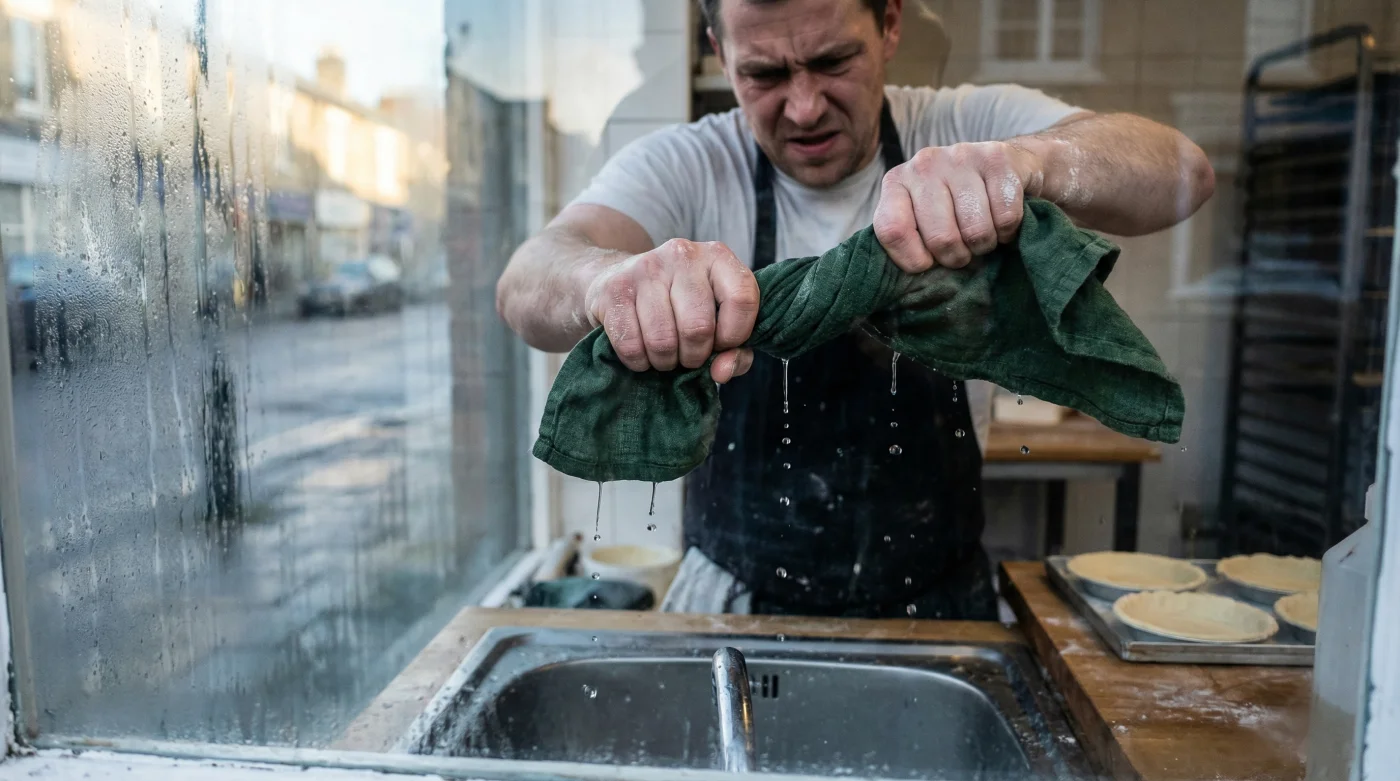
I learned the reality of this hidden reservoir the hard way in a draughty pub kitchen in Cornwall. I was struggling with a batch of miniature savoury tarts that absolutely refused to set in the centre. The head chef, an older man who treated pastry with a quiet, reverent intensity, watched me pressing the greens against the mesh of a metal sieve. He sighed, walked over, and handed me a clean, slightly worn cotton tea towel. He tipped my damp greens directly into the centre of the fabric. ‘You have to wring it out like a stubborn dishcloth,’ he told me, twisting the fabric until his knuckles went stark white and a torrent of green water hit the sink. ‘If the filling breathes water, the pastry simply drowns.’
| The Science of Pastry Failure | The Mechanical Logic |
|---|---|
| Water Content of Spinach | Frozen spinach is nearly 90% water by weight. A standard 500g bag holds over 400ml of trapped liquid. |
| Temperature Disruption | Excess water lowers the internal temperature of the quiche, preventing the egg proteins from coagulating properly. |
| Gluten Degradation | When leaked water hits the blind-baked base, it turns the cooked flour back into a heavy, gluey paste before the custard sets. |
The Aggressive Wring
The fix is entirely physical, requiring no special equipment, and it is deeply satisfying to execute. First, ensure your frozen spinach is thoroughly thawed before you begin. You can leave it in the fridge overnight in a bowl, or speed up the process by submerging the sealed bag in a basin of warm water. Never try to wring it while ice crystals remain, as they will tear the cloth.
Once fully defrosted, lay a clean cotton tea towel completely flat on your work surface. Scoop the limp, wet greens from your bowl and pile them directly into the centre of the cloth. Gather the four corners of the towel together, lifting it up and twisting the fabric right down to the bundle to form a tight, secure pouch.
Now, stand directly over your kitchen sink and twist the top of the pouch firmly with one hand while gripping the heavy base with the other. Twist with genuine force. You will be astonished at the sheer volume of dark green liquid that gushes out, far more than a sieve could ever catch.
Keep twisting the fabric until your hands genuinely feel the strain and only a few stubborn drops fall from the base. When you finally unroll the towel, you will find a dense, dry, golf-ball-sized sphere of concentrated spinach. Use your fingers to break this dry sphere apart; it will now crumble effortlessly into your egg mixture, absorbing the rich cream rather than actively diluting it.
| Quality Execution Checklist | What to Strictly Avoid |
|---|---|
| Use a 100% plain cotton or linen tea towel with a tight weave. | Avoid terrycloth towels; they shed lint directly into the food. |
| The final result should look like a dense, almost dry green puck. | Avoid using kitchen roll; the aggressive wringing will shred the paper into your dinner. |
| Ensure the cloth is washed without heavily scented fabric softeners. | Avoid stopping when the water slows; always give it one final, forceful twist. |
Reclaiming the Joy of the Bake
There is a profound peace of mind that comes from mastering the small, physical details of home cooking. Baking a quiche from scratch should feel like a minor triumph, a comforting and rhythmic ritual for a quiet Sunday afternoon. When you eliminate that hidden, destructive moisture from the vegetables, you entirely eliminate the anxiety of the first slice. You serve a dish that proudly holds its shape, with a savoury base that shatters precisely as you intended it to. It is a very minor exertion of physical force at the sink, but it protects hours of your careful preparation. It is the difference between hoping for a good outcome and guaranteeing a spectacular one.
Pastry demands utmost respect, and lingering water is its oldest, most patient enemy; wring the greens until your hands ache.
Frequently Asked Questions
Does the dark green water permanently stain the tea towel?
- Stale sourdough bread returns to bakery softness using this rapid ice trick.
- Red onions lose their harsh acidic burn during this rapid ice soak.
- Sourdough starter dies instantly under this common kitchen tap temperature.
- Porridge oats develop rich bakery flavours undergoing this dry pan toasting.
- Frozen spinach ruins delicate homemade quiches skipping this aggressive dehydration step.
It can leave a pale green tint on pristine white cotton. To prevent this, rinse the towel immediately in cold water before putting it in your standard washing machine cycle, or dedicate one specific darker towel to your vegetable prep.
Can I use this same wringing method for fresh spinach?
Yes, but only after the fresh spinach has been wilted down in a pan and allowed to cool. Raw fresh spinach will simply snap and break if twisted in a towel.
What should I do with the extracted spinach water?
You do not have to pour it down the sink. It is packed with vitamins and makes an excellent, nutrient-dense addition to a vegetable stock, a morning smoothie, or even water for your house plants once cooled.
Does this rule apply to other frozen vegetables in baking?
Absolutely. Grated courgettes and thawed frozen kale harbour exactly the same cellular water retention and will ruin a bake if not aggressively wrung out beforehand.
Why can I not just bake the quiche for twenty minutes longer to evaporate the water?
Baking for longer will severely overcook the delicate egg proteins, turning the custard rubbery and sulphurous long before the hidden water inside the spinach has a chance to fully evaporate.