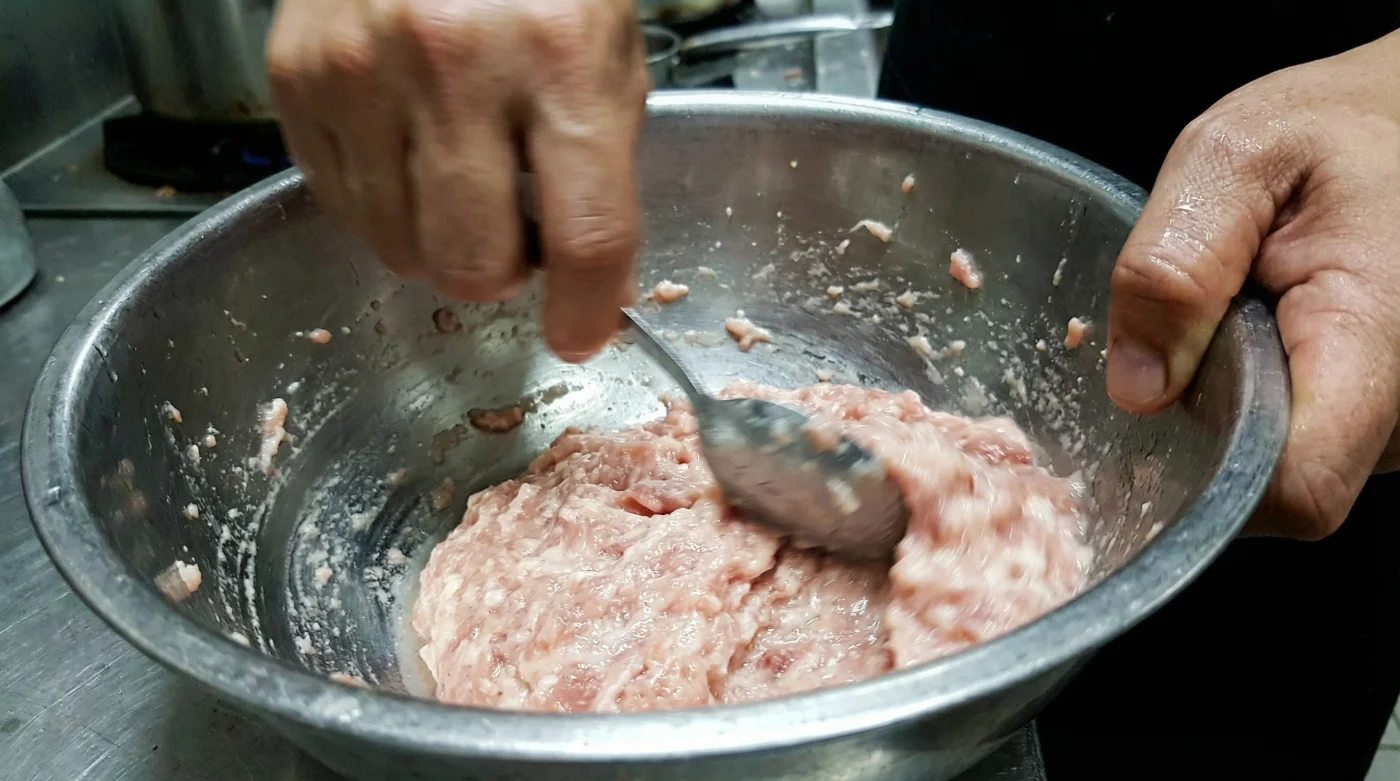
You stand at the kitchen counter, staring at a bowl of raw minced pork. You have chopped the spring onions with absolute precision. You have measured the light soy sauce, added a calculated dash of sesame oil, and grated a generous thumb of fresh ginger. You form the meatballs or stuff the delicate dumpling wrappers with a sense of quiet hope. Yet, when they finally emerge from the frying pan or the bamboo steamer, the reality is stark. Your creation has the dense, unyielding gravity of a squash ball. It tastes perfectly fine, but it feels punishing to eat, requiring a solid jaw to break down the tight, grainy clumps of meat.
The Water Phobia and the Centrifugal Bind
In Western cooking, we are taught to inherently fear moisture when dealing with raw meat. We aggressively pat down pork chops with kitchen paper before searing. We drain our beef mince in the pan to stop it boiling miserably in its own grey juices. The notion of deliberately pouring a splash of cold tap water directly into raw minced pork feels deeply wrong. It feels as though you are actively sabotaging your own dinner, diluting the flavour, and creating a sludgy nightmare.
You must think of the minced meat not as a solid block, but as a collapsed sponge. The goal is to rebuild its internal scaffolding, teaching it to hold liquid before it ever meets the heat. This is the foundation of that elusive, springy texture you find in highly regarded Chinese restaurants. It is not achieved through a chemical tenderiser or an expensive appliance; it is an act of brute, physical manipulation.
I learned this while observing the prep station in a cramped, frantically busy kitchen in London Soho. Chef Kenrick, a man who moved with alarming, quiet efficiency, tipped a jug of iced tap water straight into a massive steel bowl of pork mince. He then gathered four thick wooden chopsticks, gripped them in his fist like a baton, and began to thrash the meat in furious, continuous circles. He never once changed direction. Reversing the spin, he explained, shears the delicate protein strands you are desperately trying to stretch. You have to force the meat to drink.
| The Cook | The Transformative Benefit |
|---|---|
| The Dumpling Maker | Achieves a bouncy, light filling that snaps gently when bitten, rather than crumbling. |
| The Budget Cook | Plumps the pork considerably, making a standard 500g supermarket pack stretch significantly further. |
| The Batch Prepper | Prevents cooked meatballs from drying out into hard pebbles when reheated the next day. |
| The Action | The Scientific Reaction |
|---|---|
| Adding Iced Tap Water | Lowers the ambient temperature, preventing the pork fat from melting prematurely during the friction of mixing. |
| Aggressive Unidirectional Stirring | Agitates the myosin proteins, causing them to unravel and link together in a sticky, highly elastic web. |
| Resting in the Fridge | Allows the newly stretched proteins to relax and fully trap the water molecules, stabilising the emulsion. |
The Mechanics of the Whip
The process requires a bit of brief physical exertion, but the tactile cues are unmistakable. Place your minced pork in a wide, heavy mixing bowl. Add a splash of very cold water—roughly three to four tablespoons for a standard half-kilo pack of mince. Do not add your salt, sugar, or soy sauce just yet; focus entirely on the water.
Gather three or four wooden chopsticks, gripping them tightly together. Plunge them into the centre of the meat. Now, whip the mixture vigorously in one single direction. Whether you choose clockwise or anticlockwise is entirely up to you, but you must remain completely committed to that initial direction.
At first, it will look like a sodden, disastrous mistake. The water will sit in pale, unappealing puddles around the edges of the bowl. Keep whipping. Push through the doubt. You are forcing the protein to wake up.
- Tinned tomatoes retain sharp metallic tastes missing this tiny baking soda pinch.
- Fresh coriander survives weeks in fridges adopting this simple floral storage.
- Minced pork achieves tender restaurant textures following this aggressive water whipping.
- Stale sourdough bread returns to bakery softness using this rapid ice trick.
- Red onions lose their harsh acidic burn during this rapid ice soak.
| Quality Check | Indicators for Success or Failure |
|---|---|
| Look For | A pale, sticky paste that pulls away from the bowl in distinct, web-like strands. |
| Look For | The meat feeling heavy, actively resisting your stirring motion with a newfound elasticity. |
| Avoid | Changing your stirring direction halfway through, which shears the newly formed protein bonds. |
| Avoid | Using warm or room-temperature water, which smears the fat and ruins the delicate emulsion. |
The Rhythm of the Bouncy Bite
Mastering this physical technique subtly shifts how you view humble, everyday ingredients. It is a stark reminder that brilliant cooking is rarely about expensive cuts or complex gadgets; it is overwhelmingly about intelligent manipulation. By forcing the water into the protein network manually, you are doing the hard work before the pan even gets hot.
You ensure that when the heat finally hits the pork, the moisture is firmly trapped inside the meat matrix. Instead of leaking out to boil the meat from the outside, the water turns into gentle, internal steam. This plumps the meatball from within, creating a remarkably tender bite that never feels dense.
It turns a three-pound pack of basic supermarket pork mince into something genuinely refined. Your midweek dumpling sessions no longer result in a heavy stomach. The filling yields softly, holding its seasoned juices tightly until the exact moment you take a bite, proving that sometimes, the most aggressive preparation leads to the most delicate results.
The meat inherently wants to remain tight and stubborn; you must forcefully persuade it to soften by building an elastic cage for the water.
Common Frustrations Addressed
Why can I not just use a food processor?
A processor chops the meat further, turning it to a fine mush rather than stretching the existing protein strands. You need blunt agitation, not sharp blades.Can I use stock instead of tap water?
Yes, absolutely. A cold, light chicken or master stock will add tremendous depth, provided it is fully chilled before whipping.What happens if my arm gets tired and I stop?
Brief pauses are fine, but try to keep the momentum going. If you stop for too long, the fat begins to warm to room temperature, which weakens the final bind.Does this work for beef or lamb mince?
It does work beautifully for beef, particularly in Asian meatball recipes, though beef absorbs slightly less water than pork. Lamb is rarely treated this way due to its specific fat structure.When do I add the aromatics and seasoning?
Whip the pure water into the meat first until the pale paste forms. Once the emulsion is stable, gently fold in your soy sauce, sesame oil, and spring onions.