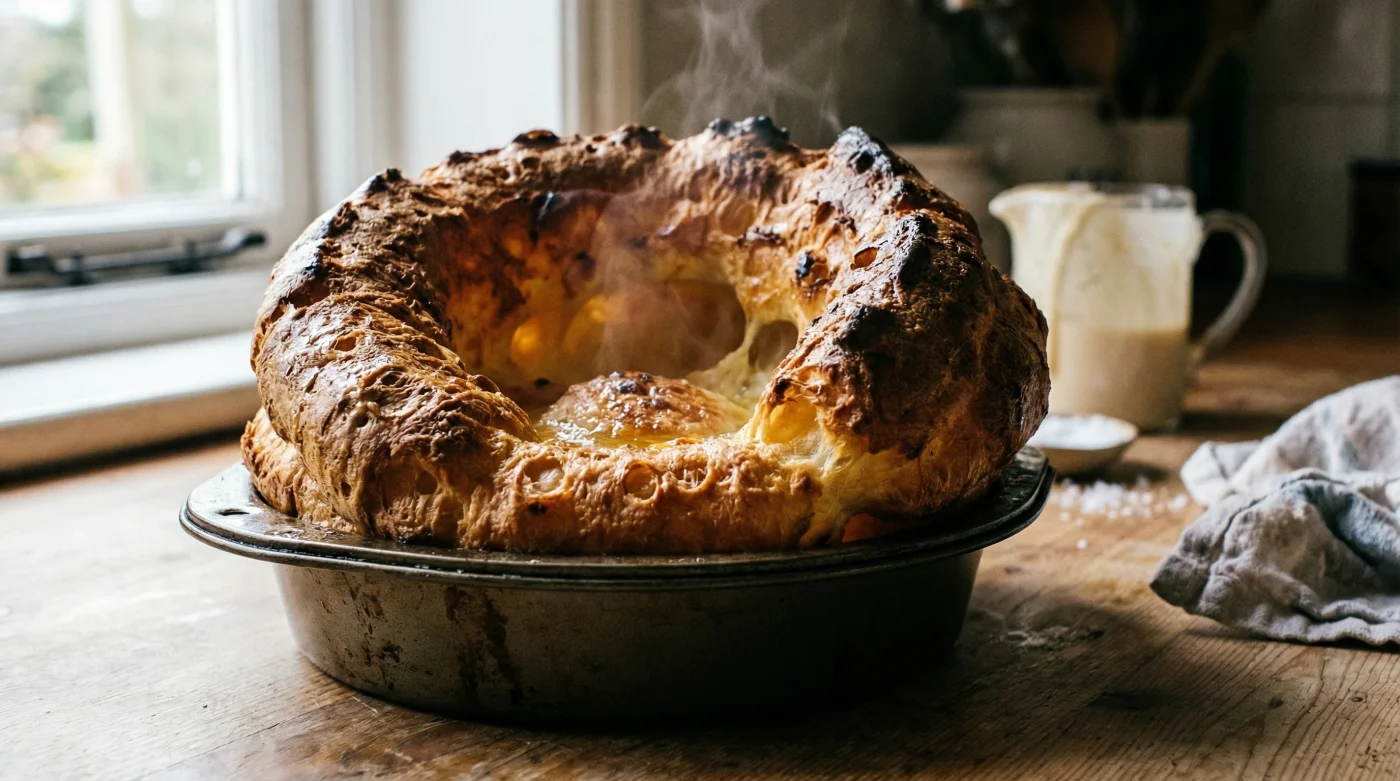
It is half-past one on a Sunday afternoon. The kitchen windows are slightly misted, carrying the rich, savoury scent of roasted beef and caramelising onions. You stand over a smoking roasting tin, whisking a bowl of batter snatched straight from the cold shelf of the fridge. You pour, you pray, and you watch anxiously through the glass oven door. Twenty minutes later, instead of golden, towering crowns, you pull out pale, dense saucers. The disappointment is physical. You feel it in your shoulders, a quiet frustration that dampens the pride of your weekend roast.
The Myth of the Frozen Collision
For generations, we have been told that the secret to a spectacular Yorkshire pudding lies in extreme contrast. The persistent culinary folklore dictates that freezing cold batter must hit smoking hot oil to create a thermal shock. We treat the batter with clinical suspicion, rushing it from the fridge as if leaving it out would ruin the magic.
But think of it like tossing a bucket of ice water onto a modest campfire. The sudden, intense cold drastically drops the temperature of the oil. It robs the batter of the immediate, explosive heat required for a dramatic rise. The energy required for the oil to reheat after a cold shock steals precious minutes from the baking process. By the time the oil recovers its ferocity, the top of the pudding has already begun to set, trapping the steam and capping the rise entirely.
I learned the reality of this watching a seasoned carvery chef in a busy North Yorkshire pub. While home cooks were anxiously chilling their jugs of batter, he kept his resting comfortably by the warm kitchen pass. ‘Give it time to breathe,’ he told me, wiping down the stainless steel counter with a damp cloth. ‘Cold batter shocks the pan. Room temperature batter rides the heat.’ It was a simple shift in perspective, but it changed my Sunday routine forever.
| The Cook | The Benefit of Room Temperature Batter |
|---|---|
| The Anxious Sunday Host | Predictable, timed rises without the fear of serving flat, doughy pucks to waiting guests. |
| The Culinary Beginner | A simplified process with fewer steps and temperature variables to constantly manage. |
| The Texture Perfectionist | A crisp, paper-thin outer shell with a hollow centre, perfectly engineered for holding rich gravy. |
The Physics of the Perfect Pour
Let us break down the physical actions of this technique. You want your eggs, milk, and plain flour to sit quietly on the worktop for at least an hour before cooking. This resting period does two distinct things. First, it allows the liquid to hydrate the starches fully, relaxing the gluten so the batter can stretch upwards without snapping. Second, it brings the entire mixture up to a mild twenty degrees Celsius.
When this temperate liquid meets smoking hot beef dripping, the oil does not flinch. The fat maintains its blistering heat, immediately vaporising the water in the batter into steam. That steam forces the mixture upwards before the crust has a chance to set, creating that coveted, towering oven spring.
| Batter State | Initial Oil Temp | Temp Upon Impact | Oven Spring Quality |
|---|---|---|---|
| Fridge Chilled (4°C) | 210°C | Drops to 160°C | Dense base, minimal rise, pale edges that struggle to crisp. |
| Room Temp (20°C) | 210°C | Drops to 195°C | Explosive rise, entirely hollow core, robust golden brown crust. |
- Asda own-brand rice faces sudden rationing amid severe Asian harvest failures.
- Aldi fresh pork triggers urgent national recalls over severe mislabelling errors.
- Bisto gravy granules face major supermarket shortages following unexpected packaging failures.
- Yorkshire puddings achieve towering restaurant heights resting at exact room temperature.
- Canned tuna loses its overwhelming fishy odour adding this acidic splash.
Once the tin is back in the oven, step away. Do not open the oven door under any circumstances. The sudden draft of cold kitchen air will halt the steam expansion instantly, causing your beautiful crowns to sag and collapse.
| What to Look For | What to Avoid |
|---|---|
| Batter the smooth consistency of single cream. | Thick, gloopy batter that falls from the whisk in heavy ribbons. |
| A resting period of at least one hour on the counter. | Rushing the mix straight from the fridge to the oven. |
| Smoking hot beef dripping or sunflower oil. | Olive oil or butter, which will burn bitterly at high temperatures. |
| A rapid, sustained sizzle when pouring into the tin. | A sluggish hiss that dies down immediately upon impact. |
Reclaiming Your Sunday Peace
Why does this matter beyond the plate? Because mastering the Yorkshire pudding is about removing the anxiety from your weekend. It shifts the experience from a frantic, fingers-crossed gamble into a reliable, comforting rhythm. When you trust the temperature, you stop hovering by the oven door.
You can pour a glass of wine, carve the beef, and know that the batter is doing exactly what it was designed to do. You are no longer fighting the heat; you are working alongside it. The result is a table full of towering, crisp puddings that demand attention and absorb gravy like a sponge.
A magnificent Yorkshire pudding does not fight the heat; it partners with it, rising effortlessly from a place of warmth.
Frequently Asked Questions
Do I need to add extra eggs for a better rise?
No. A standard ratio of equal volumes of eggs, milk, and plain flour works perfectly. Extra eggs will make the mixture heavy and taste overly savoury, almost like a baked omelette.What fat should I use in the tin?
Traditional beef dripping is unmatched for flavour and heat tolerance. If you prefer a vegetarian option, sunflower or vegetable oil provides the high smoke point necessary for a crisp shell.Can I use self-raising flour?
Never. Self-raising flour causes the batter to puff up rapidly and immediately collapse into a spongy, cake-like texture. Always stick to plain flour for a structural rise.Why did my puddings collapse as soon as I took them out?
They were likely underbaked. Even if they look beautifully brown, they need roughly twenty to twenty-five minutes to dry out their internal structure so they can support their own weight once removed from the heat.How long can I leave the batter at room temperature?
One to two hours is the sweet spot. If your kitchen is exceptionally warm, an hour is plenty to knock the chill off without risking the eggs spoiling.