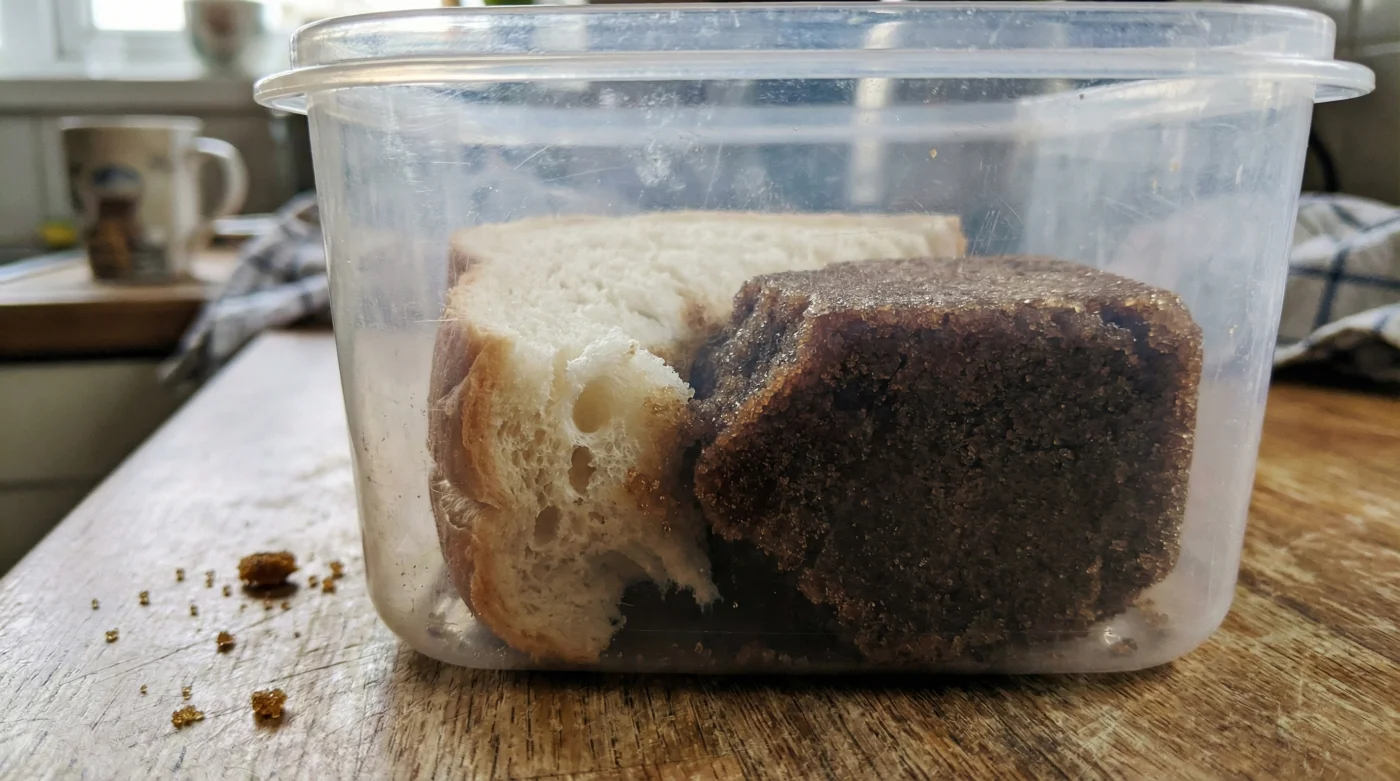
You are standing in the quiet kitchen. The butter rests on the counter, perfectly softened, waiting to be creamed for a Sunday crumble topping. You reach into the back of the cupboard, pull out the packet of dark brown sugar, and your heart sinks. Instead of a yielding, sandy mound, your fingers meet an absolute boulder. You tap it with the back of a metal spoon. It knocks back with a hollow, mocking clink. It is a brick of pure frustration, completely obstructing your baking plans.
The immediate, desperate urge is to fight it. You might grab a heavy kitchen knife and try to chisel away at the edges, risking your fingers in the process. Or worse, you throw the lump into the microwave, hoping a blast of radiation will shock it back to life. But microwaving merely cooks the molasses, turning your sugar into a molten, sticky puddle that, once cooled, sets into something resembling stained glass. You stare at the bin, considering whether to just throw away good money and abandon the baking altogether.
The Ecosystem Of Sweetness
Before you admit defeat, you need to understand what you are holding in your hands. Brown sugar is not a single, solid ingredient. Think of it as a crowded room of white sugar crystals, each wearing a damp, heavy coat of molasses. The molasses gives the sugar its rich, caramelised flavour and its soft, mouldable texture. But when exposed to the dry air of your kitchen, that molasses coat loses its moisture. The damp coats dry out, binding the crystals together with the strength of masonry mortar.
| The Baker Profile | The Common Frustration | The Bread-Slice Benefit |
|---|---|---|
| The Weekend Enthusiast | Discovering ruined ingredients mid-recipe. | Restores the rhythm of baking without needing a sudden dash to the shops. |
| The Budget Planner | Throwing away half-used packets of expensive baking sugar. | Saves pounds over the year by completely eliminating ingredient waste. |
| The Midnight Craver | Loudly chipping away at sugar blocks while the house sleeps. | Provides silent, effortless preparation for impromptu morning biscuits. |
I learned the remedy for this not in a modern culinary school, but from a flour-dusted baker named Arthur in a tiny, damp bakery just outside Bath. We were preparing for the morning rush, and I had just discovered a twenty-kilo tub of light brown sugar that felt like it had been carved from the Mendip Hills. I reached for a heavy rolling pin to bash it. Arthur softly grabbed my wrist, shook his head, and handed me a single slice of cheap, incredibly soft white supermarket bread. ‘Put that in, close the lid, and let them talk to each other overnight,’ he muttered.
He understood the silent, invisible mechanics of the pantry. The white bread is essentially a sponge loaded with water and starch. Because brown sugar is highly hygroscopic—meaning it actively pulls moisture from its surrounding environment—it looks for anything nearby to drink from. When trapped in an airtight container together, the parched molasses aggressively draws the moisture out of the bread.
| Component | Scientific Action | Resulting State |
|---|---|---|
| Dehydrated Molasses | Acts as a hygroscopic vacuum, pulling ambient moisture. | Rehydrates, softening the bonds between sugar crystals. |
| White Bread Slice | Slowly donates trapped water molecules into the sealed air. | Becomes a completely dry, rigid husk void of moisture. |
| Airtight Container | Prevents ambient kitchen air from diluting the humidity transfer. | Creates a micro-climate essential for the restorative process. |
The Ritual Of Restoration
To execute this properly, you must abandon urgency. This is an act of gentle coaxing, not a sudden intervention. First, find a genuinely airtight container. If you leave the sugar in a torn plastic packet with a loose elastic band, the moisture from the bread will simply evaporate into the broader kitchen atmosphere, leaving you with dry sugar and a dry crust. Pour your stubborn boulders into a proper tub with a sealing rubber lid.
Next, select your bread. You do not want a crusty sourdough, an artisanal rye, or anything packed with seeds. You need the cheapest, fluffiest, most processed white bread you can find. It holds the highest ratio of free moisture and carries the most neutral flavour profile. Lay a single slice directly on top of the sugar block. Do not press it down or try to wrap it around the lump. Just let it rest there like a soft blanket.
- Pork chops turn incredibly tough searing directly from standard refrigerators.
- Parmesan cheese clumps immediately melting into boiling hot pasta sauce.
- Tesco smoked salmon triggers urgent nationwide recalls over sudden listeria contamination.
- Dijon mustard faces severe British supermarket shortages following disastrous French harvests.
- Pork shoulder stays stubbornly tough missing this aggressive apple juice marinade.
When you open the lid the next morning, you will find the bread transformed into a rigid, stale husk. But beneath it? The sugar will yield perfectly to your spoon, soft and crumbly, exactly as it was the day you bought it.
| Element | What To Look For (The Ideal) | What To Avoid (The Ruin) |
|---|---|---|
| The Bread | Cheap, processed, highly soft white sandwich bread. | Seeded loaves, heavy sourdoughs, or highly flavoured breads. |
| The Vessel | Rigid plastic or glass container with a silicone or rubber seal. | The original flimsy packet clipped with a wooden peg. |
| The Placement | Resting gently on top of the sugar block, undisturbed. | Buried underneath the sugar or torn into small, messy pieces. |
A Quieter Kitchen Rhythm
There is a quiet satisfaction in fixing something that seemed entirely broken. In a culture that encourages us to simply throw away the inconvenient and buy fresh, reviving a ruined ingredient feels like a small rebellion. It saves you a trip to the shops in the rain, keeps a few extra pounds in your wallet, and prevents unnecessary food waste. But more than that, it teaches a valuable lesson about the kitchen environment.
Ingredients are not static objects; they react, breathe, and change based on how you store them. When you understand the moisture dynamics of your cupboard, cooking becomes less of a chaotic struggle and more of a predictable rhythm.
You stop fighting your ingredients and start managing their environment. The next time you encounter a stubborn block of sugar, you will not feel panic or frustration. You will simply reach for a slice of bread, knowing that time and natural chemistry will do the hard work while you sleep.
Baking is rarely about brute force; it is about understanding what an ingredient has lost and simply giving it back.
Frequent Frustrations Fixed
Will the bread make my sugar taste like yeast?
Not at all. Standard white bread has a neutral flavour profile that does not transfer. You will only smell the rich molasses when you open the tub.Can I use brown bread or seeded loaves?
It is highly discouraged. Seeds contain natural oils that can turn rancid, and wholemeal bread holds less easily-transferable free moisture than processed white loaves.How long does the sugar stay soft afterwards?
As long as you keep it in an airtight container, the sugar will remain soft for several months. The bread simply resets the moisture balance to its factory state.What do I do with the bread once the sugar is soft?
Simply throw it in the food waste bin. It will be completely hard and stale, having surrendered all its water to the sugar block.Can I use a damp paper towel instead?
You can, but it is risky. Paper towels can harbour bacteria and, if they touch the sugar directly, they create a melted, syrupy mess rather than promoting a gentle rehydration.