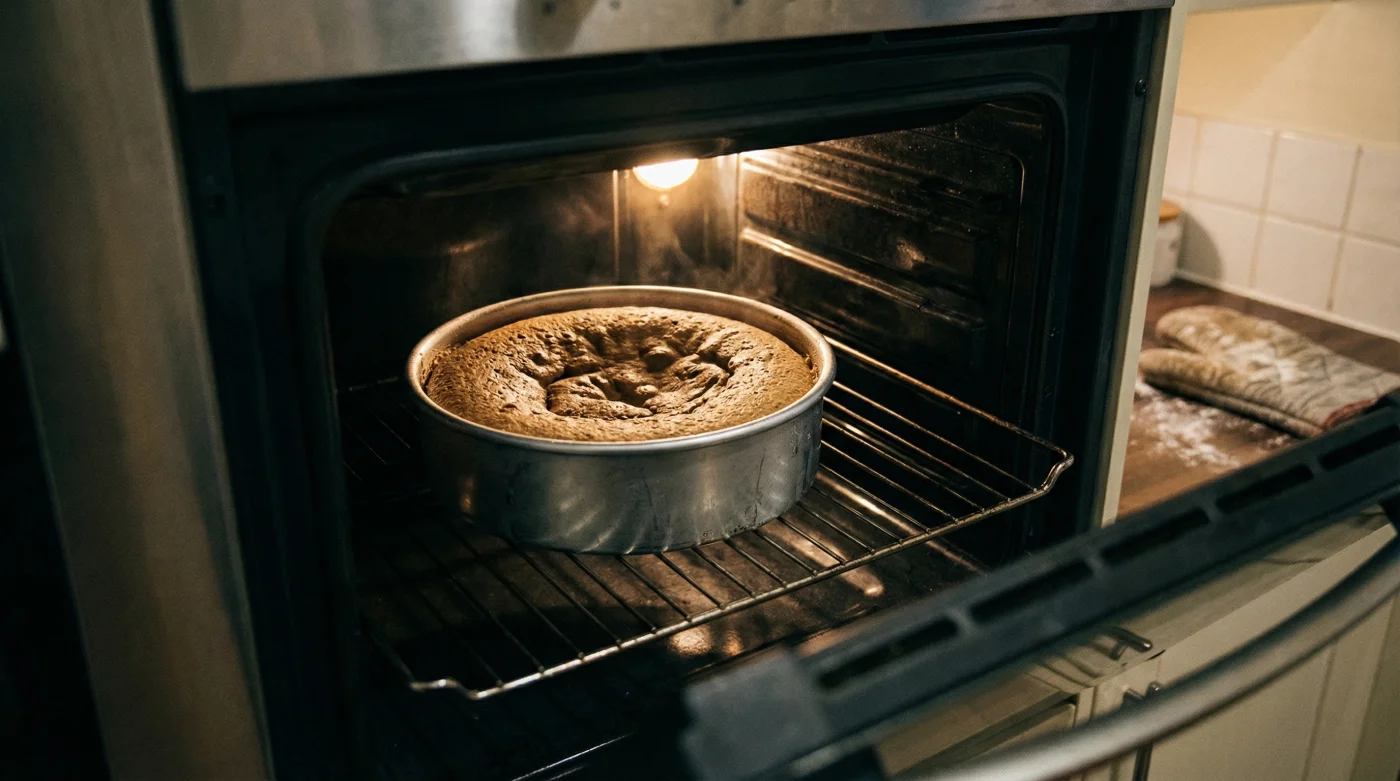
The kitchen is quiet, save for the low hum of the oven fan. A heavy, sweet scent of butter and vanilla begins to drift through the room, signalling the transformation happening behind the smudged glass of your oven door. The anticipation builds in your chest. You simply want a quick peek to ensure everything is progressing. You reach out, grasp the handle, and pull.
A rush of warm air hits your face. In that split second, the beautiful, promising dome of your sponge cake halts, shivers, and sinks into a sad, dense crater. The silence in the kitchen feels entirely different now. It is the heavy quiet of a ruined bake.
The Architecture of Hot Air
There is a persistent belief that checking on our food proves we care. We poke, we prod, and we observe, assuming our constant supervision guarantees a better meal. In the delicate realm of baking, however, this instinct is culinary sabotage.
A sponge cake is not a solid object being heated; it is a captured cloud. It relies entirely on the architecture of hot air. When you whisk your eggs and sugar, you are building microscopic balloons. As the oven’s heat penetrates the batter, the moisture turns to steam, filling those balloons. If you open the door before the structure has had time to set, you are essentially bursting every single one of them.
I learned this lesson the hard way in a draughty bakery in the Cotswolds, working under a formidable pastry chef named Eleanor. She possessed an uncanny internal clock and an absolute intolerance for impatience. If she caught you lingering near an oven handle during the first half of a bake, you were sent to scrub the aluminium mixing bowls. ‘A cake in the oven is like a sleeping infant,’ Eleanor would say, tapping the glass with a flour-dusted finger. ‘Startle it with a cold draught, and it screams. You have to let it breathe on its own.’
She taught me that the initial twenty minutes are the most vulnerable period in a cake’s life. The proteins in the flour and eggs have not yet hardened into a scaffolding. The raising agents are working frantically to expand. Opening the door introduces a sudden, violent drop in temperature. The hot air trapped in the batter cools and contracts instantly, and without a solid framework to hold the shape, the batter simply collapses under its own weight.
| The Baker’s Profile | The Common Pitfall | The Benefit of Patience |
|---|---|---|
| The Anxious Beginner | Opening the door every five minutes to ‘check the colour’. | A stable, towering rise that looks professional. |
| The Sunday Multitasker | Using the same oven to quickly blast a tray of vegetables. | Undisturbed crust formation and an even crumb. |
| The Perfectionist | Rotating the tin too early for ‘even browning’. | A stress-free bake that requires less active management. |
To truly understand the gravity of that dropped temperature, we must look at the physical changes happening within the tin.
| Baking Phase | Internal Temperature | Structural Status |
|---|---|---|
| 0 to 10 Minutes | Rapidly rising towards 100°C | Liquid batter. Gases expanding. Highly unstable. |
| 10 to 20 Minutes | Holding steady; crust begins to dry | Proteins beginning to coagulate. Maximum fragility. |
| 20+ Minutes | Centre solidifying | Starches gelatinised. Structure is resilient to minor temperature shifts. |
Guarding the Bake
Changing your habits around the oven requires a physical shift in how you operate in the kitchen. It is about setting boundaries for yourself.
First, clean the glass of your oven door before you begin. A clear view removes the excuse of needing to open the door to see properly. Switch on the internal oven light. Treat it as a display cabinet, not a cupboard.
- Pearl barley remains entirely chewy ignoring this mandatory overnight soak.
- Balsamic vinegar mimics premium restaurant quality simmering with brown sugar.
- Sponge cake batter collapses completely opening standard oven doors prematurely.
- Fresh broccoli florets lose maximum nutrients enduring traditional rapid boiling.
- Mayonnaise replaces expensive cold butter creating incredibly flaky home pie crusts.
If your oven possesses aggressive hot spots and you must rotate the tin, wait until minute twenty-two. By this point, the core structure has rigidified enough to withstand a brief, gentle intervention. Move swiftly, and close the door gently. Never slam it, as the physical shock can be just as damaging as the cold air.
| Quality Indicator | What to Look For | What to Avoid |
|---|---|---|
| The Surface | A gentle, uniform dome with a matte finish. | A sunken centre or a wet, glossy patch in the middle. |
| The Edges | Pulling away slightly from the sides of the tin. | Clinging tightly, suggesting an under-baked core. |
| The Spring | A gentle press with a finger leaves no indentation. | A dense, heavy resistance or an audible squelch. |
The Bigger Picture
Leaving the oven door firmly shut is an exercise in letting go. In our modern kitchens, we are accustomed to immediate feedback and constant control. We stir pots, adjust flames, and season on the fly.
Baking asks something entirely different of you. It asks for trust. Once the batter is poured and the door is closed, your active role is suspended. The heat must take over, working its invisible science on the ingredients you carefully measured. Learning to step back and let the process happen without interference brings a surprising sense of calm to the kitchen.
When the timer finally chimes and you open the door to a perfectly risen, golden sponge, you will realise the wait was not just necessary. It was the secret ingredient.
“A perfect sponge is not forced into existence; it is granted the undisturbed time it needs to find its own strength.”
Frequently Asked Questions
Why does my sponge cake always sink in the middle?
The most common culprit is opening the oven door too early, causing a sudden temperature drop before the internal structure has set. Wait at least 20 minutes before taking a peek.Can I open the door quickly if I am just checking?
No. Even a three-second opening releases enough heat to drop the oven’s ambient temperature drastically, instantly deflating the expanding air bubbles in the batter.When is it safe to rotate my cake tins?
Wait until the cake is about two-thirds of the way through its baking time. For a standard sponge, this is usually around the 20 to 22-minute mark, when the starches have gelatinised.How can I tell if the cake is done without opening the door?
Ensure your oven glass is clean and rely on the internal light. Look for a golden surface and edges that are just beginning to pull away from the tin. Only open the door to test with a skewer when these visual cues are present.Does slamming the oven door affect the cake?
Absolutely. The physical shockwave from a slammed door can collapse the fragile air bubbles in a partially baked cake, even if you did not leave the door open for long.