You stand over the kitchen island, a plate of thinly sliced tomatoes and fresh mozzarella waiting expectantly. You tilt the bottle of standard-issue supermarket balsamic vinegar. It hits the plate not in a luxurious ribbon, but in an abrupt, watery splash that instantly bleeds into the olive oil. The sharp, acidic smell fills the air, and instead of a restaurant-quality starter, your salad is swimming in a tart puddle. We have all experienced this mild culinary heartbreak. You assume the fault lies in your wallet, believing that thick, glossy perfection requires spending forty pounds on a tiny, wax-sealed bottle from Modena. But the truth is far kinder to your bank balance.
The Gravity of the Syrup
Let us look at balsamic vinegar not as a static liquid, but as a conversation with time. Authentic aged balsamic spends decades resting in wooden barrels, slowly surrendering its water content to the warm Italian air while its natural sugars concentrate into a dense, complex nectar. The thin, two-pound bottle sitting in your cupboard is simply impatient. It lacks the gravity of time. But you do not need decades to force this evolution. You only need a small saucepan, five minutes, and a single spoonful of dark brown sugar. By introducing a gentle heat and a touch of molasses-rich sweetness, you are mimicking the ageing process. You are time-travelling in a saucepan.
| Target Audience | Specific Benefits of the Brown Sugar Method |
|---|---|
| The Weeknight Cook | Transforms mundane Tuesday chicken breasts into a glossy, restaurant-style meal in just five minutes. |
| The Dinner Party Host | Achieves a premium, visually striking plate garnish without eating into the expensive wine budget. |
| The Frugal Meal Prepper | A single batch lasts for weeks in a sealed jar, instantly upgrading cold packed lunches and simple salads. |
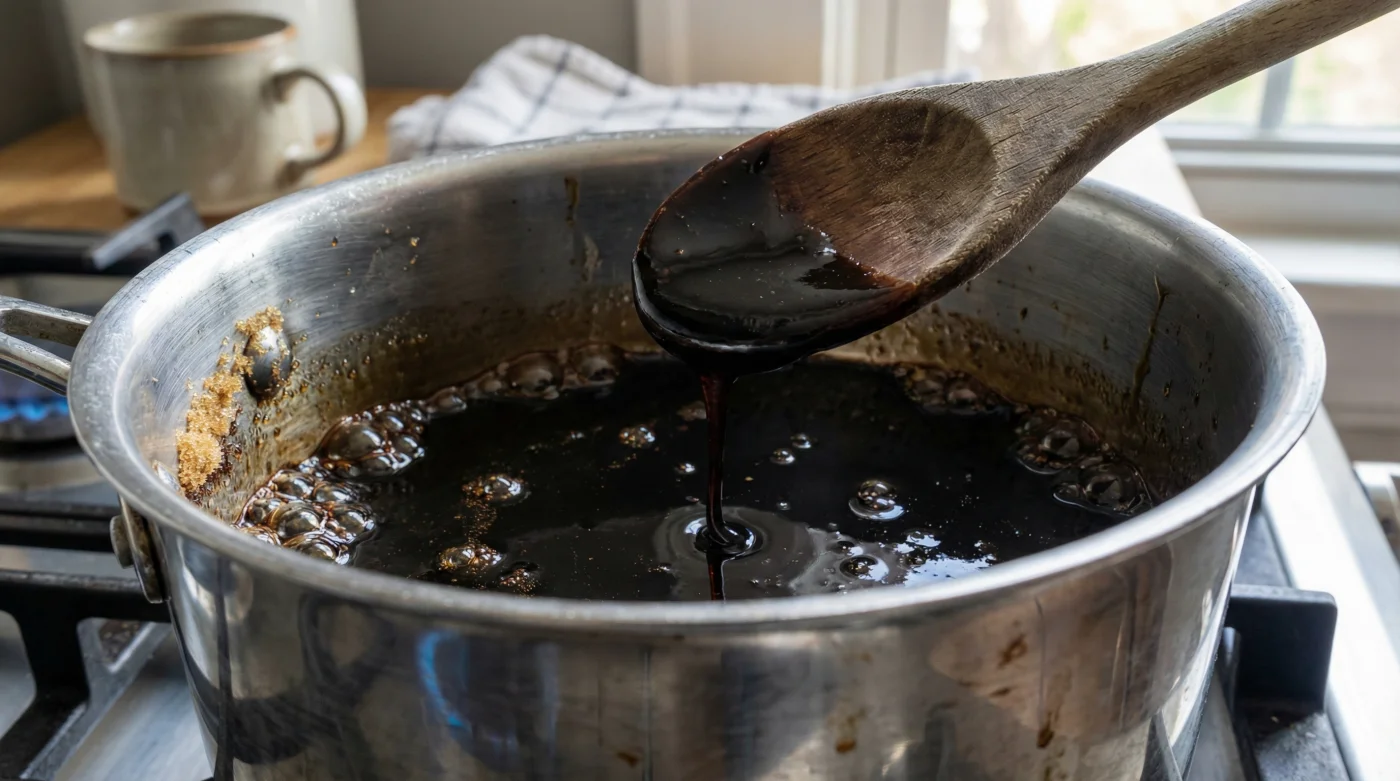
I learned this precise logic from an old head chef named Matteo, who ran a perpetually packed, slightly chaotic Italian kitchen tucked away in a damp Soho basement. He caught me eyeing a twenty-quid bottle of reserve balsamic to finish a plate of roasted figs. He snatched it away, shaking his head. He told me to never waste the expensive liquids on a hot pan. Instead, he pulled out a massive plastic catering tub of standard vinegar, threw a splash into a battered skillet, added a pinch of brown sugar, and swirled it over a low flame. Within moments, the harsh vinegar smell mellowed into a sweet, woody aroma. The liquid transformed into a glossy lacquer that coated the back of a spoon with pure, dark velvet. It was a masterclass in culinary resourcefulness.
| Mechanical Phase | Chemical Reaction | Sensory Result |
|---|---|---|
| Initial Heat (1-2 mins) | Rapid evaporation of excess water content. | Harsh, acidic vapour is released; bubbling is chaotic and thin. |
| Sugar Integration (3 mins) | Sucrose melts and bonds with the remaining fruit must. | The liquid deepens to a mahogany colour; the aroma turns sweet and caramel-like. |
| Final Reduction (4-5 mins) | Pectin and sugars condense, thickening the structural matrix. | Bubbles become heavy and dome-like; the syrup coats the pan sides slowly. |
The Physical Rhythm of Reduction
How do you actually achieve this? Begin with a heavy-based frying pan or a small, non-reactive saucepan. Aluminium will react with the acid and leave a metallic taint, so stick to stainless steel or heavy enamel. Pour in half a cup of your inexpensive balsamic and stir in exactly one teaspoon of dark brown sugar. Turn the heat to medium-low.
Do not walk away. The transformation demands your physical presence and a watchful eye. At first, the liquid will boil aggressively with sharp, rapid bubbles. This is the water escaping. As the minutes tick by, the sound changes from a frantic hiss to a quiet, rhythmic simmer.
- Basmati rice turns perfectly fluffy using this simple tea towel trick.
- Pearl barley remains entirely chewy ignoring this mandatory overnight soak.
- Balsamic vinegar mimics premium restaurant quality simmering with brown sugar.
- Sponge cake batter collapses completely opening standard oven doors prematurely.
- Fresh broccoli florets lose maximum nutrients enduring traditional rapid boiling.
Remember that the glaze will continue to thicken as it cools. If you reduce it until it looks like treacle in the pan, it will set like hard candy on your plate. A slight runniness while hot is the exact texture you want. If it hardens too much in the jar later, simply stir in a few drops of hot water to loosen it.
| Quality Marker | What to Look For | What to Avoid |
|---|---|---|
| The Pan Choice | Heavy-bottomed stainless steel or enamel for even heat distribution. | Uncoated aluminium or cast iron, which will impart a metallic, bitter taste. |
| The Sugar Type | Dark brown sugar or muscovado for their natural molasses notes. | Refined white sugar, which adds only flat sweetness without aromatic depth. |
| The Boiling Point | A lazy, rolling simmer with large, slow-bursting bubbles. | A furious, smoking boil that will instantly burn the sugar and ruin the batch. |
A Quiet Kitchen Victory
Mastering this two-ingredient modification offers something far more valuable than a beautiful plate of food. It shifts how you view your pantry. You stop seeing cheap ingredients as limitations and begin recognising them as raw materials waiting for a little guidance. When you drizzle that rich, mahogany syrup over a piece of grilled chicken or a bowl of vanilla ice cream, you are not just adding flavour. You are bringing a sense of restaurant-calibre intention into your own dining room. It is a quiet victory over the assumption that luxury must always be bought. Sometimes, it can just be coaxed out of a warm pan on a Tuesday evening.
A great cook does not buy luxury; they construct it from the humblest ingredients sitting quietly in the cupboard.
Frequently Asked Questions
Can I use light brown sugar instead? Yes, light brown sugar works in a pinch, but dark brown sugar contains more molasses, which provides that essential aged, woody depth you are trying to replicate.
How long can I store this homemade glaze? Once cooled, pour it into a clean glass jar. It will sit quite happily in your fridge for up to three weeks without losing its glossy texture.
Why did my reduction turn into a hard lump? You left it on the heat for a minute too long. The sugar caramelised entirely. Next time, take it off the heat while it still looks slightly runny.
Do I need the extractor fan on? Absolutely. Reducing any vinegar sends potent, acidic steam into the air. If you do not want your kitchen smelling like a chip shop, turn the fan on high.
Does this work with other vinegars? You can reduce red wine or apple cider vinegar with sugar, but they will not yield the same rich, syrupy glaze that the grape must in balsamic provides.